
Habulus Tranquil Contact
Reach the project desk for brochures, cost sheets, floor-plan references, location help, and current project material tied to Habulus Tranquil in Electronic City Phase 1.
The Habulus Tranquil enquiry desk is most useful when it connects the project facts to the buyer’s preferred configuration.
Habulus Tranquil is being sold as a family-oriented under-construction community in Electronic City Phase 1, so the most useful enquiries are usually tied to a real project decision: 2 BHK versus 3 BHK, NeoTown location fit, pricing comfort, or the relationship between current construction stage and possession timing. The contact form is therefore less about generic lead capture and more about helping the reader move from broad interest to a more specific understanding of the project.
The project’s strongest enquiry themes are already clear from the rest of the site: pricing, layout, planning quality, amenity depth, and the Electronic City catchment. A useful reply should therefore help a reader understand the exact configuration, the live commercial context, and how the four-tower community story translates into the home type they are considering.
This matters especially on under-construction projects because timing and document quality shape the decision as much as the underlying brochure pitch. Habulus Tranquil has enough substance that a good project response should make the next step feel clearer, not noisier.
The most useful Habulus Tranquil response pack usually combines project facts, configuration data, and current commercial context.
Readers reaching this page are typically trying to connect one of the project’s key themes to their own shortlist: whether the 2 BHK is enough, whether the 3 BHK premium is justified, how the four-tower plan feels compared with denser alternatives, or whether the NeoTown address fits an Electronic City routine. The strongest project response is therefore the one that ties the brochure, pricing, and layout references together rather than treating them as separate marketing pieces.
This is also where the project’s independent strengths become useful. Habulus Tranquil has a cleaner story than many launches because the main decision points are visible: approval positioning, family-sized layouts, amenity depth, and a location that makes practical sense for south Bengaluru routines.
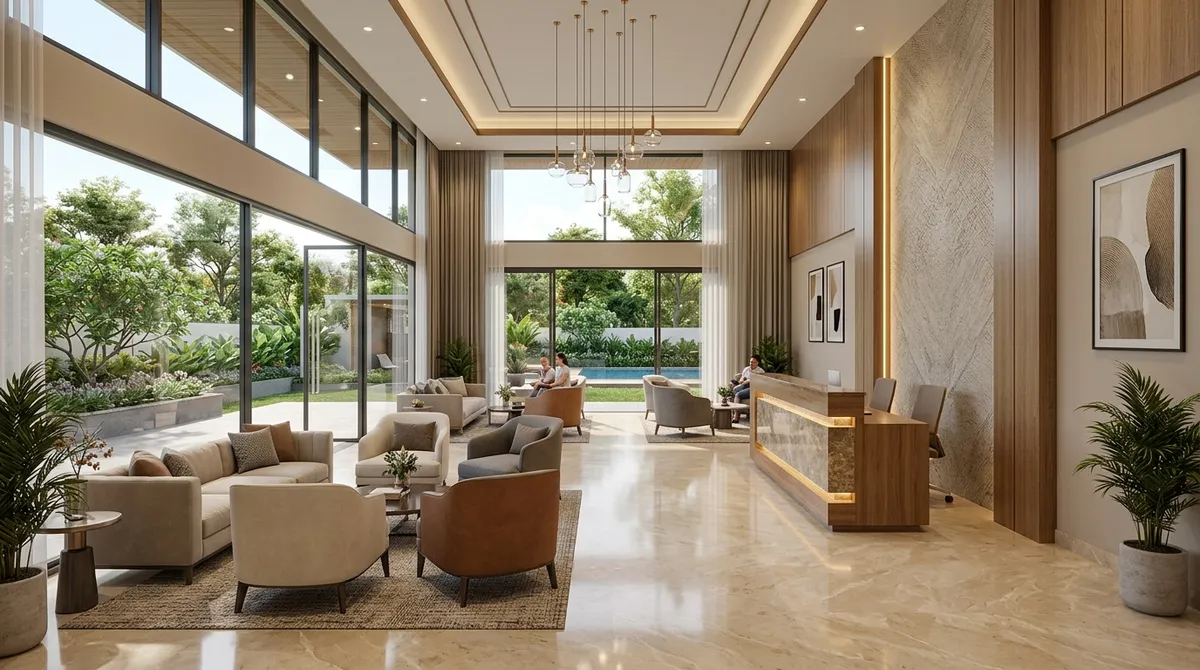
Community context
The clubhouse visual is a reminder that the enquiry is not only about a unit price. It is also about the wider community package being sold alongside the home.
What the project desk can typically share
| Material | Why it matters |
|---|---|
| Brochure and project summary | Useful for the full product story, scale, and amenity positioning |
| Current pricing and cost sheet | Clarifies how the base rate expands into the actual payable commercial |
| Floor-plan references | Helps compare the 2 BHK and two 3 BHK formats as actual homes |
| Location and map details | Connects the NeoTown address to daily routines around Electronic City |
| Construction-stage update | Frames the project against the builder target and RERA timeline |
Useful public references around the project.
The official project page, Habulus Group site, BSR Developers site, and verified map link help connect the enquiry to the wider project context without turning this page into a citation directory.
Contact Habulus Tranquil - Frequently Asked Questions
How do I contact the Habulus Tranquil project desk?
Use the Contact Project Desk button on the site to submit your enquiry. The project team responds with project documents, the current cost sheet, RERA compliance updates, and a site-visit callback aligned to the configuration you are evaluating.
Can I schedule a site visit to Habulus Tranquil?
Yes. Submit a request through the contact form mentioning your preferred date and configuration interest. The verified map link from the project record is shared on confirmation, alongside approach-road details and current ground status.
What should I request before a Habulus Tranquil site visit?
Ask for the full cost sheet, the current floor plan drawing set, and the latest RERA compliance update. Having those documents in hand before the visit lets the site viewing focus on qualitative observations - approach quality, on-site progress, and surrounding development pattern - rather than document collection.
How do I request the Habulus Tranquil brochure?
Mention brochure in the contact form note and the project desk shares the current brochure pack in writing. Specify the configurations you are evaluating (2 BHK, 3 BHK 2T, or 3 BHK 3T) so the team can return tailored layout and pricing material.
What information helps the Habulus Tranquil team respond faster?
Include the configuration of interest, preferred budget band, target timeline for booking, and any specific RERA, payment plan, or possession questions. The more specific the brief, the faster the project team can return a useful, written response.
Is there a cost to enquire about Habulus Tranquil?
No. Submitting a contact form, requesting the brochure, or scheduling a site visit is free. Booking amounts and registration fees only apply once you formally choose to commit to a unit, with refund terms documented in writing at that point.